Lara Beach
Turtle bay in the Akamas — no facilities, a rough track in, and nesting loggerheads.
History lovers, relaxed coastal days, archaeological sites and sunset walks
A slower, more atmospheric side of Cyprus — with ancient ruins, seaside promenades and the Akamas close by
Peyia and Coral Bay, Akamas, Chrysoroyiatissa, Tzelefos bridge
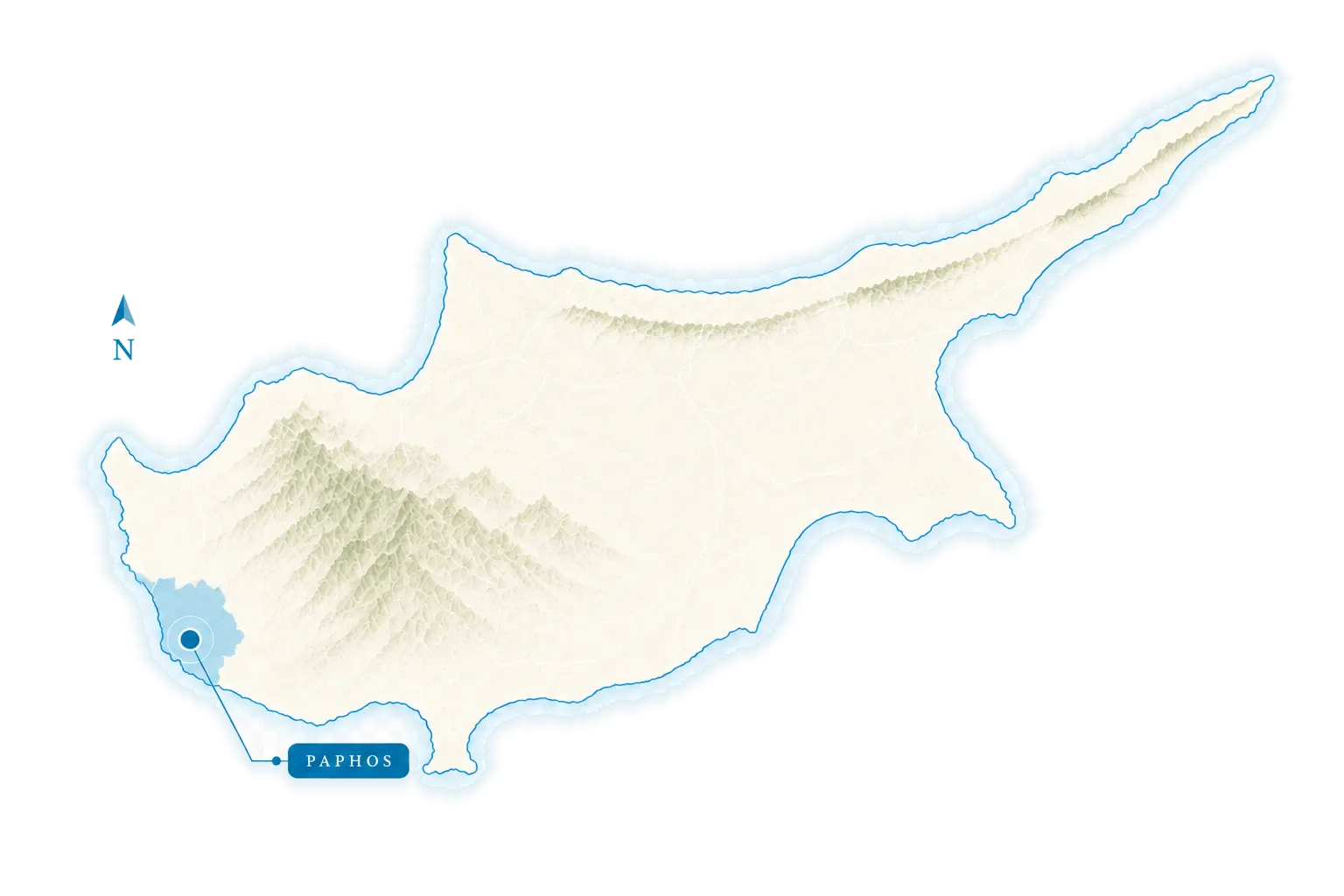
Paphos sits on the southwest coast, and much of it is on the UNESCO list of world cultural treasures. The archaeological park holds four great Roman villas — the Houses of Dionysos, Theseus, Aion and Orpheus — alongside an agora, a theatre and the necropolis known as the Tombs of the Kings.
The castle at the harbour edge began as a Byzantine fort and has been fortress, prison and salt warehouse in turn. North and west the coast turns wild: the Akamas peninsula, its crystal water and its loggerhead and green turtle nesting beaches, and Aphrodite’s Rock on the road east.
Perfect for
Archaeology, harbour evenings, wild coastline, gorges and monasteries
Paphos today
Air: MET NorwaySea: NOAA Coral Reef Watch
Roman floors in the archaeological park and Hellenistic rock-cut tombs two kilometres north of the harbour.
230 square kilometres of untouched headland — Lara, the Blue Lagoon, Avakas Gorge. Some of it needs a 4×4 or a boat.
Petra tou Romiou, where Aphrodite is said to have risen from the sea, sits beside the Limassol road.
Find places to stay, eat, explore and experience the city.
Beaches & Coast
Blue-flag beaches, promenades and seaside spots.
ExploreSightseeing
Churches, landmarks, museums and historic places.
ExploreThings to Do
Activities, experiences and ways to spend your day.
ExploreVillages
Traditional villages, stone lanes and slower afternoons.
ExplorePlaces to Stay
Hotels, apartments and places to stay in Paphos.
Places to Eat
Restaurants, cafés and places to eat in Paphos.
Turtle bay in the Akamas — no facilities, a rough track in, and nesting loggerheads.
The fort at the end of the harbour quay — Byzantine, twice rebuilt, once a prison, then a salt warehouse.
A Hellenistic necropolis cut into solid rock, with underground peristyle atriums — and, despite the name, no kings.
230 square kilometres of untouched headland — the last large unspoiled coast on the island, and a Natura 2000 site.
A 3km limestone canyon on the edge of the Akamas — two to three hours on foot, best in spring and autumn.
Where the goddess rose from the foam — sand on one side, pebbles on the other, and a myth about swimming round it three times.
A natural grotto on the east side of the Akamas where legend puts the goddess bathing.
Founded in 1170 by the monk Neophytos, who carved his hermitage out of the rock.
A 16th-century monastery in the Xeros valley near Pentalia — long abandoned, and among the finest Byzantine buildings left standing in the district.
Our Lady of the Golden Pomegranate, founded in the 12th century above Pano Panayia and still working — with a winery in the courtyard.
A cargo ship run aground on the rocks by the sea caves at Peyia in 2011, and left there — now the most photographed sunset in Paphos.
One of the most ancient ports on the island, first built in 320 BC and still in the same place — with the castle at the end of the quay.
A small waterfall and pool in the hills above Koili, where the Mavrokolympos water gathers. Privately owned, so there is an entrance charge.
Built at Pachyammos after a miracle reported by a village resident, on ground where hard fighting took place in 1964.
230 square kilometres of untouched headland — the last large unspoiled coast on the island, and a Natura 2000 site.
A 3km limestone canyon on the edge of the Akamas — two to three hours on foot, best in spring and autumn.
One of the most ancient ports on the island, first built in 320 BC and still in the same place — with the castle at the end of the quay.
One of the largest villages of the Paphos district, on the slopes above Coral Bay at the edge of the Akamas.
Driving on the left, cards and cash, whether you need a car at all — the practical questions, answered.
Good to KnowChoose your kind of day
Decide first whether you want the harbour and heritage, a beach visit or a nature outing. The castle and Tombs of the Kings provide a history starting point; Akamas and Avakas belong to a different kind of day, with conditions and access to consider.
Give the harbour and castle a city-focused visit; make Tombs of the Kings a deliberate heritage stop. Keep Avakas or the Akamas coast for a separate nature outing and consult the place guides before setting out.
Compare Coral Bay in our island-wide beach guide with Lara on the Akamas coast. They are different choices: the guide to Lara explains its protected setting and access considerations. Treat Petra tou Romiou as a coastal sightseeing stop rather than a substitute for choosing a swimming beach.