Choirokoitia is a Neolithic village on a hillside above the Maroni river, about 6km inland from the south coast and 32km from Larnaca. People lived here for the better part of two thousand years, from around 7000 BC, and enough of it survives that UNESCO added it to the World Heritage List in 1998 — one of only three sites in Cyprus to carry that status.
How it was found
The site was discovered in 1934 by Porphyrios Dikaios, the director of Antiquities in Cyprus, who excavated from 1934 through to 1946. Further excavation followed in the 1970s but stopped with the Turkish invasion in 1974; work resumed in 1977.
What makes Choirokoitia important is not only its preservation but the evidence of how the settlement was set up and how it worked — a well-organised, functioning society enclosed by communal defences. Around 20 similar settlements are known on the island; this is the best preserved of them.
What you actually see
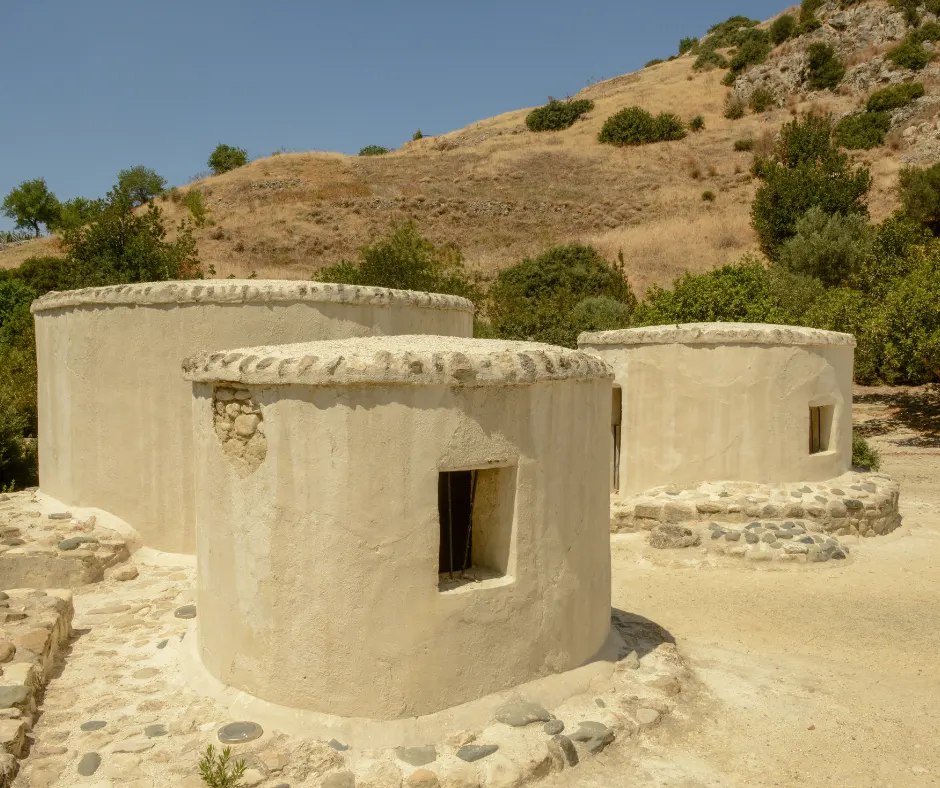
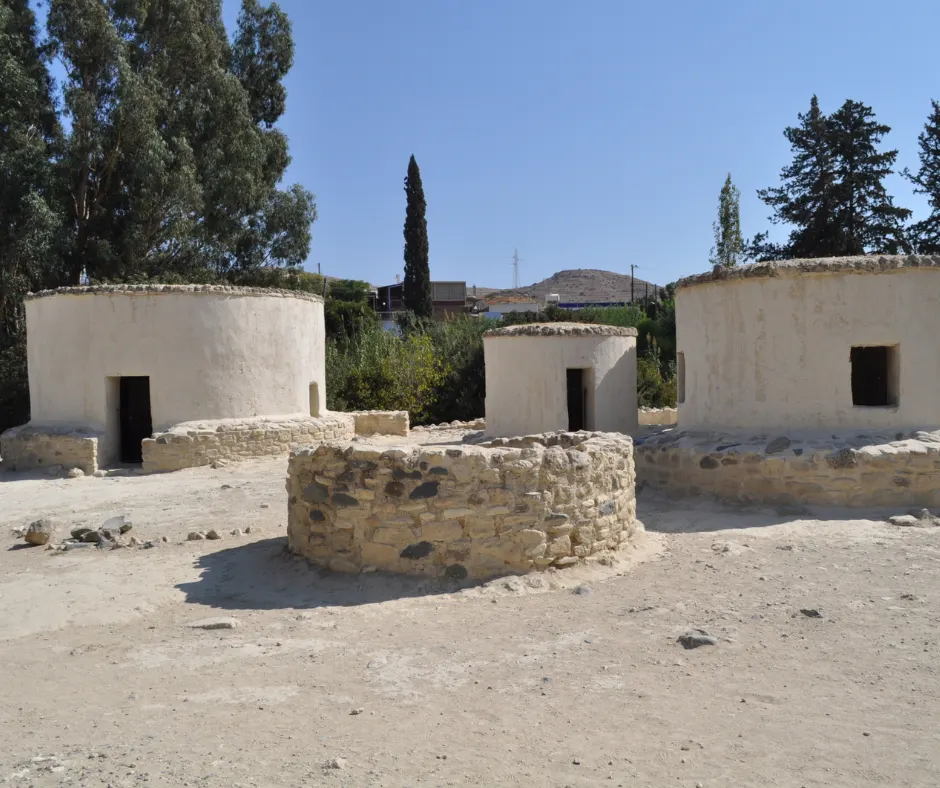
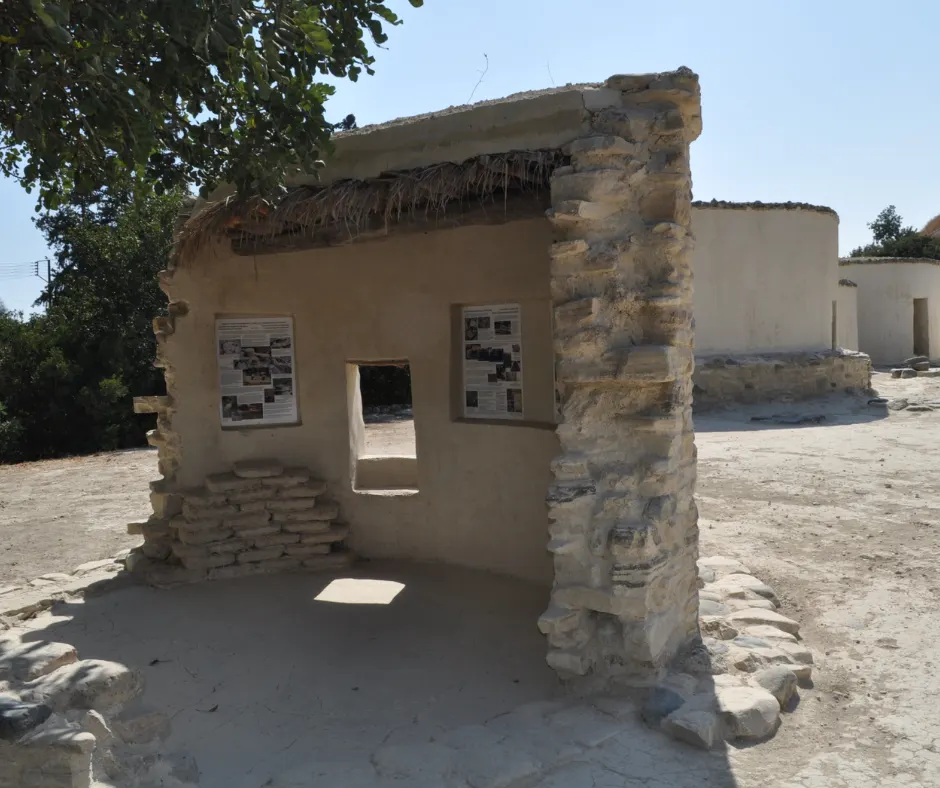
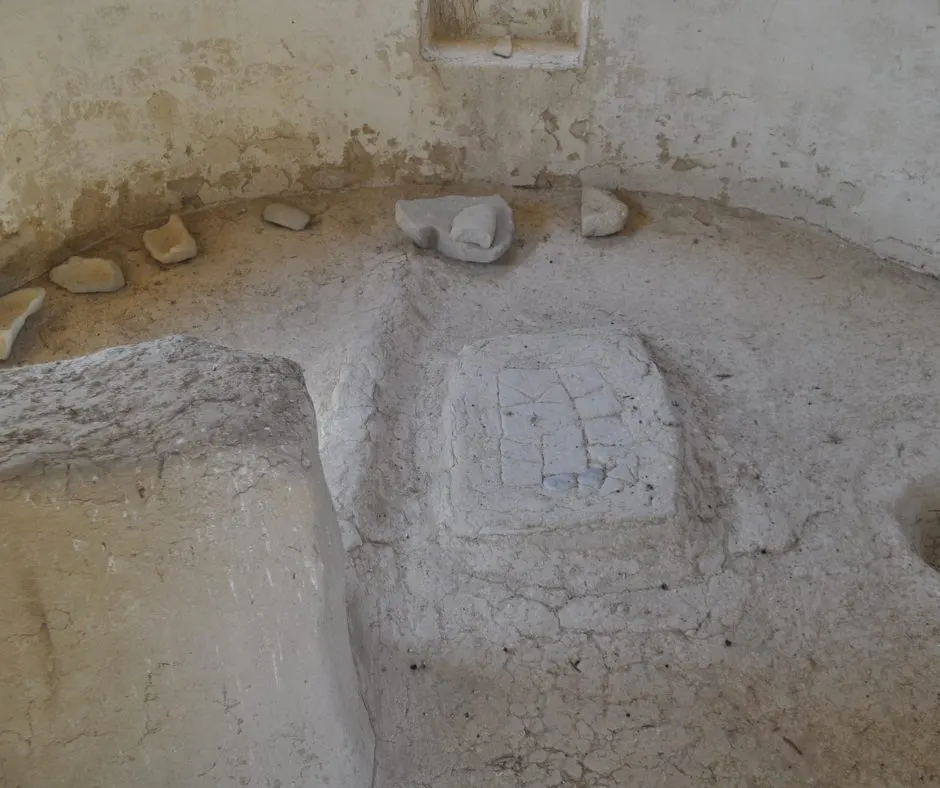
Five round houses have been rebuilt at the foot of the site, using the materials and building methods of the originals and furnished with replicas of the objects found inside them. They are the easy part of the visit. The settlement itself is the excavated ground above — house floors, wall bases and the line of the enclosure wall climbing the slope, with part of the hill deliberately left undug for archaeologists who come later.
The village itself
Choirokoitia is also an agrotourism destination — timber architecture, cobbled streets, traditional basket weaving, and a restored olive oil mill you can visit to see the old methods and tools. The local church is the Byzantine Panagia tou Kambou, Our Lady of the Fields, with Gothic and medieval elements and frescoes dating to the 16th century; there are more churches in the village besides, among them Agia Paraskevi, Agios Georgios, Agios Iacovos and Agios Kyriakos.
The village was abandoned around 5200 BC, and nobody has established why — which is as good a reason as any to walk it.
More sightseeing around Larnaca
Stavrovouni Monastery
One of the oldest monasteries in the world, on a lone peak above the Larnaca plain — founded, tradition says, by Saint Helena in the 4th century.
Hala Sultan Tekke
A mosque and shrine among palms on the west shore of the salt lake, built over the tomb of Umm Haram — one of the most significant Islamic sites in the Mediterranean.
Larnaca Salt Lake
Four connected lakes covering 2.2 km² beside the airport road — dry and white in summer, and full of flamingos from November.
Kourion Archaeological Site
A city-kingdom on a limestone bluff a hundred metres above the sea — theatre, baths, mosaics and gladiators’ house.