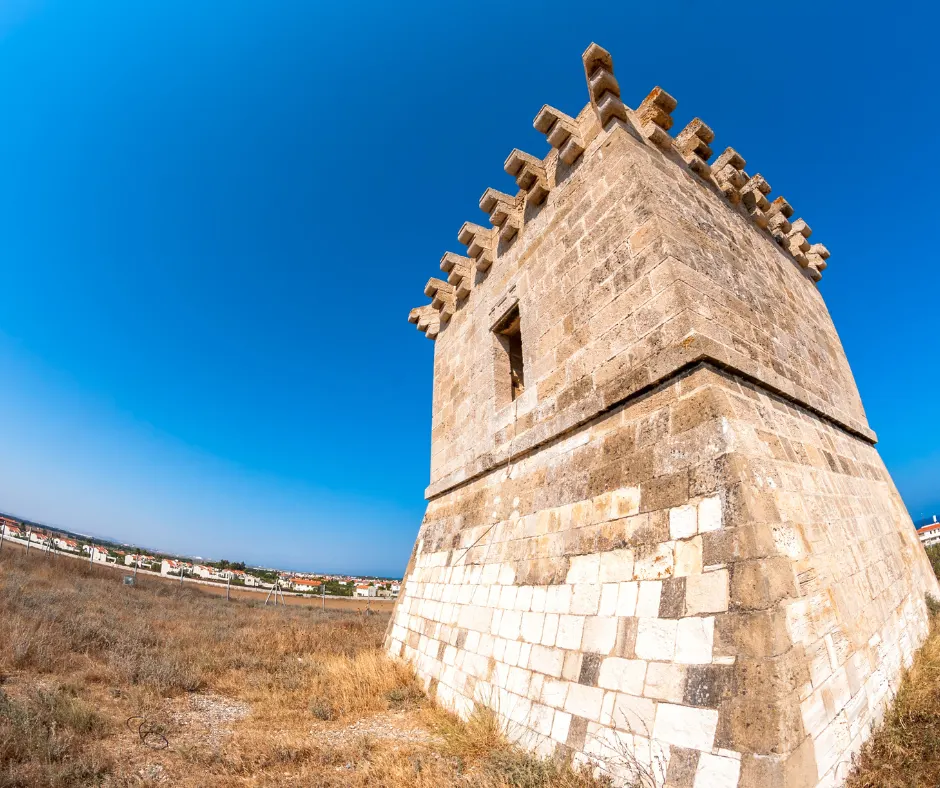
Drive south out of Larnaca towards Cape Kiti and you will pass it without meaning to: a squat stone box alone in a dry field, too small for a castle and far too solid for a barn. Kiti Tower has watched this coast for close to five hundred years, and almost nobody stops.
Why Kiti Tower matters
It is a surviving link in a chain. Under Venetian rule Cyprus was a front-line island, and its southern shore was watched from a line of small towers built within signalling distance of one another — a sail on the horizon could be reported inland long before anyone came ashore. Most of that network has gone. This one is still standing, still square, still facing the same sea.
A short history
Venetian rule on Cyprus ran from 1489 to the Ottoman conquest of 1571, and the tower belongs somewhere inside that span. Exactly where is disputed: some accounts say the late fifteenth century, others the sixteenth, and one names a year in the 1560s and a Venetian commander. Repairs are recorded in the early twentieth century, and it is now a protected monument in the care of the Department of Antiquities.
What makes the tower distinctive
A plain square block, about six metres to a side and eight tall, cut stone on a base that slopes outward to shrug off anything swung at the foot of the wall. Stone corbels project from the top to carry a parapet, so defenders could stand clear of the face. The one doorway sits several metres up, reached by a ladder that could be hauled in behind you — the whole ground floor was a cistern, with the living quarters above. Above the entrance, the winged lion of Saint Mark, the badge of Venice, is recorded among the carving.
Combine it with
Kiti village holds Panagia Angeloktisti, whose sixth-century apse mosaic of the Virgin is among the finest early Byzantine work anywhere. The Cape Kiti lighthouse is two kilometres south, the Pervolia beaches are minutes away, and the salt lake and Hala Sultan Tekke sit between here and the airport.
More sightseeing around Larnaca
Hala Sultan Tekke
A mosque and shrine among palms on the west shore of the salt lake, built over the tomb of Umm Haram — one of the most significant Islamic sites in the Mediterranean.
Larnaca Salt Lake
Four connected lakes covering 2.2 km² beside the airport road — dry and white in summer, and full of flamingos from November.
Kamares Aqueduct
Twenty-odd Ottoman arches on the Limassol road, lit after dark and free to walk up to.
Kato Drys village
Lefkara’s quiet neighbour: beekeepers, a folk museum and almost no traffic.