Halloumi, eggs, olives and a coffee nobody drinks quickly
There is no single dish called a Cypriot breakfast. There is a table — halloumi still squeaking from the pan, eggs, olives, tomato cut thick, a plate of cured meats, warm bread, and a coffee nobody drinks quickly.
You will find it in village kafeneia and in bright city brunch spots, on a Sunday terrace and on a Tuesday before work. What holds a Cypriot breakfast together is not a recipe but a set of local ingredients that happen to belong together on the same plate.
Here is what goes on it, what to drink alongside, and how to have one — whether you are heading to Cyprus or building it at home.
What is a Cypriot breakfast?
Ask ten Cypriots and you will get ten answers, because a Cypriot breakfast is assembled rather than cooked. It borrows the meze instinct — a lot of small good things at once, meant to be picked at and shared — and applies it to the morning. The only real cooking is a pan of eggs and a few minutes of halloumi on the heat. Everything else is sliced, spooned and put out. You may hear locals call a substantial morning meal like this a mboukkoma — a proper mouthful, as opposed to a coffee and something sweet on the way to work.
That is also why it moves so easily between the traditional and the modern. The same ingredients that filled a farmer’s morning — cheese, olives, bread, whatever the garden had that week — turn up on a carefully arranged brunch board in Limassol with jams in little bowls beside them. The difference is presentation, not substance.
What is on a Cypriot breakfast plate?
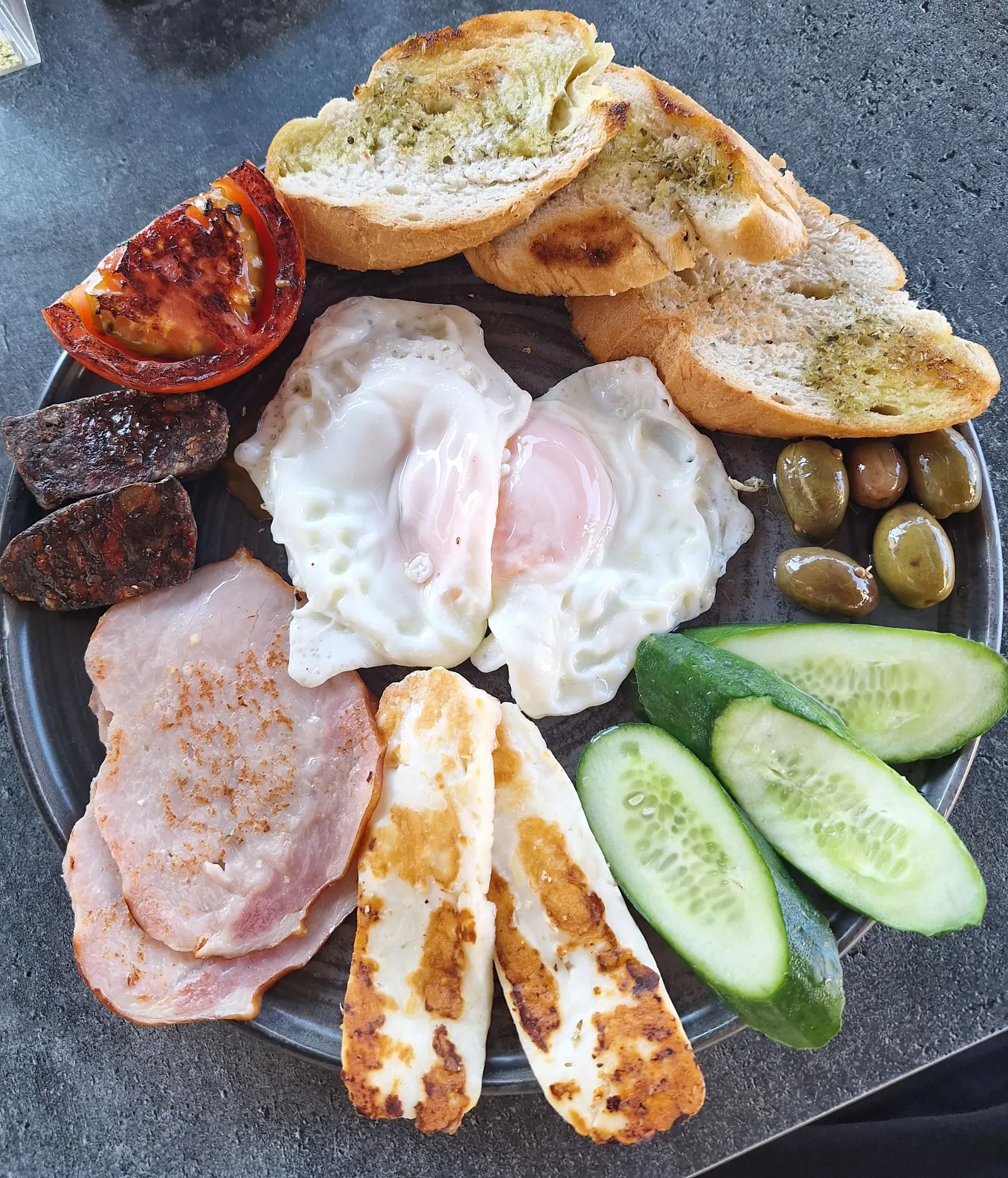
Eggs, usually fried, sometimes boiled. Halloumi, grilled until it is golden and squeaks against the teeth, often alongside a softer white cheese such as anari. Cured and sliced meats — smoked ham, lountza, a few rounds of spicy village sausage. Olives. Tomato, either raw or blistered on the grill. Cucumber. Bread. And around the edges, the accompaniments that do the quiet work: butter, honey, olive oil, and small bowls of jam or spoon sweets.
One plate, everything at once — the shape a Cypriot breakfast usually takes.
Put it all on one plate and it looks like this: bread, two eggs, grilled halloumi, ham and sausage, olives, cucumber and a charred half tomato. Salty, fresh, warm and cool at the same time, with nothing dominating — which is exactly the point.
Cypriot coffee, frappé or freddo espresso?
Breakfast here is timed by the coffee rather than the food. Traditionally that means a Cypriot coffee — ground fine, brewed in a briki, served in a small cup with a glass of cold water and an unspoken rule about not drinking the last mouthful. In summer it means a frappé, instant coffee shaken into a tall foam over ice and nursed for an hour. The modern answer, and the one most people order now, is a freddo espresso: cold, sharp and quick. All three are correct.
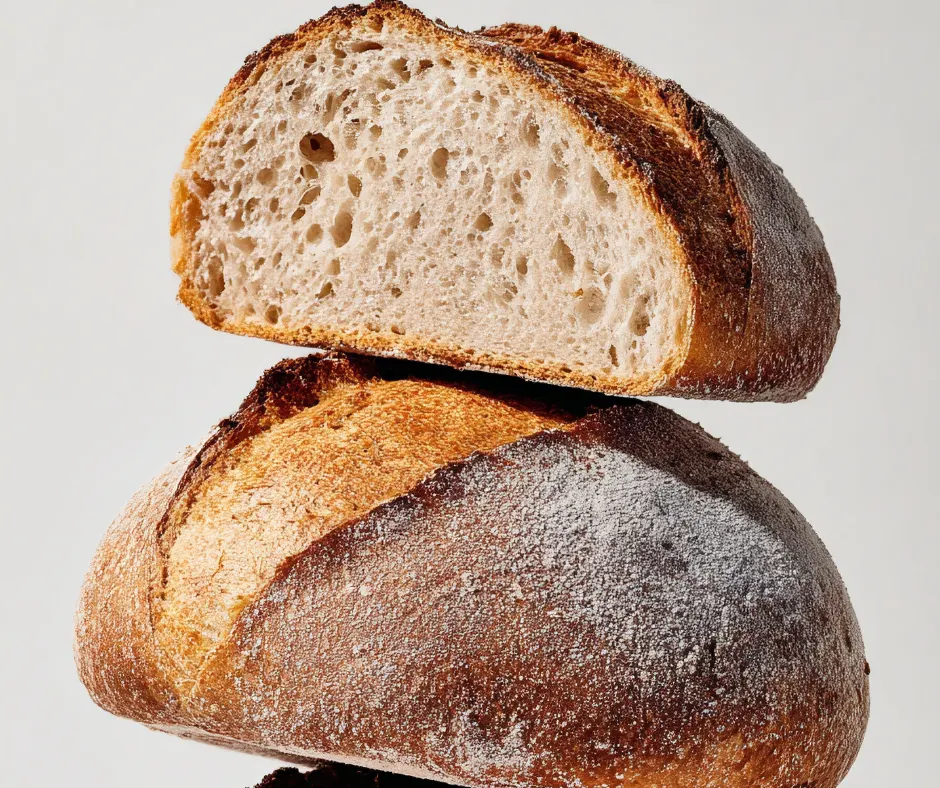
At home it is a shopping list rather than a recipe. Halloumi, a softer white cheese, olives, tomatoes, cucumber, a few slices of cured meat, eggs and the best loaf you can find. Fry the eggs, grill the halloumi, cut everything else and put it all out at once. Ten minutes of work, and it feeds a table.
In Cyprus, look for the word brunch. Cafés and restaurants in Limassol, Nicosia, Larnaca and Paphos build breakfast plates around local ingredients, usually served late into the morning, which suits the pace of the thing. In the villages the version is plainer and often better: bread, halloumi, olives, eggs and a coffee, at a table under a vine.
A Cypriot breakfast is not a dish to hunt down. It is a morning to give yourself — order one on a terrace while the day is still cool, take longer over it than you meant to, and you will have learned something about how the island eats.
Google Analytics sends limited measurement signals without analytics cookies before you choose or if you reject. Accept enables analytics cookies. You can change your choice in Cookie settings.